
Infinite Trading.
Strategies on autopilot.
Markets move around the clock. Your strategy should be more than a tab you keep refreshing.
Infinite Trading connects market intelligence, automated strategies and on-chain tools. Discover a setup. Understand the exposure. Decide what to automate.
Trading has tools. Strategy needs a system.
Research, execution and position management too often live in different places. The gap between them becomes the trader’s job.
- Watch markets across multiple tabs.
- Translate a signal into a trading decision.
- Execute, rebalance and monitor manually.
- Repeat as the market changes.
- Scan a watchlist and configure signals.
- Inspect strategies and their mechanics.
- Choose a vault or trading workflow.
- Review positions and on-chain activity.
Automation is not the absence of decisions. It is a way to make the repeatable parts of a strategy operational.
One ecosystem. More ways to participate.
Research. Trade. Automate. Build. Each part of the stack creates another reason to use Infinite Trading, and another route for product activity to contribute to the ecosystem.
Strategy vaults
Trading bots, AI/ML strategies, yield, indices and RWA vaults turn a market thesis into an operating portfolio. Discover a strategy and inspect its holdings, performance and mechanics.
Explore vaults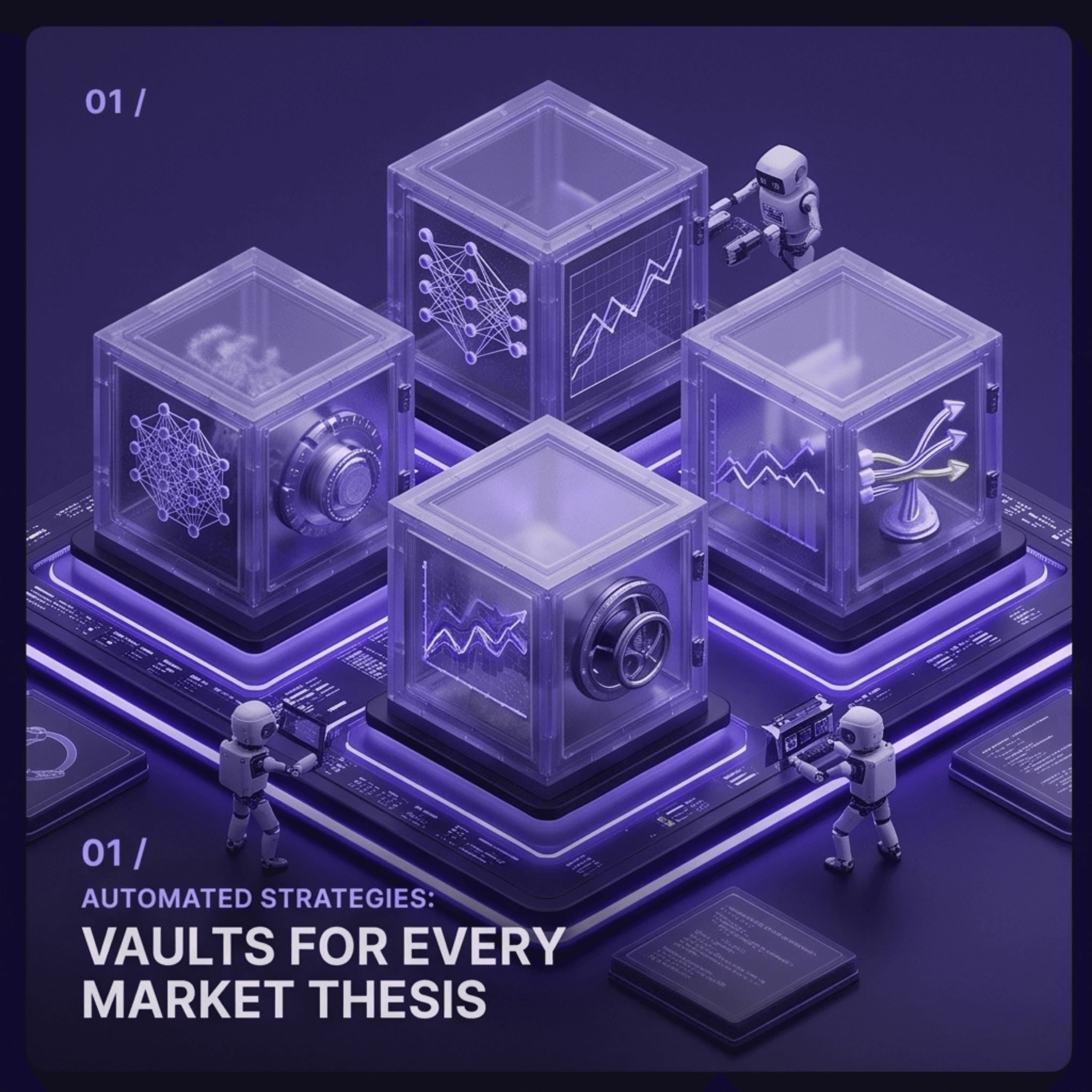
Trading
Swap and bridge across chains beside your vaults, including tokenized stocks on Robinhood Chain and Base and real-world assets like tokenized gold. Inspect routes, review quotes and approve transactions on your terms.
Open trading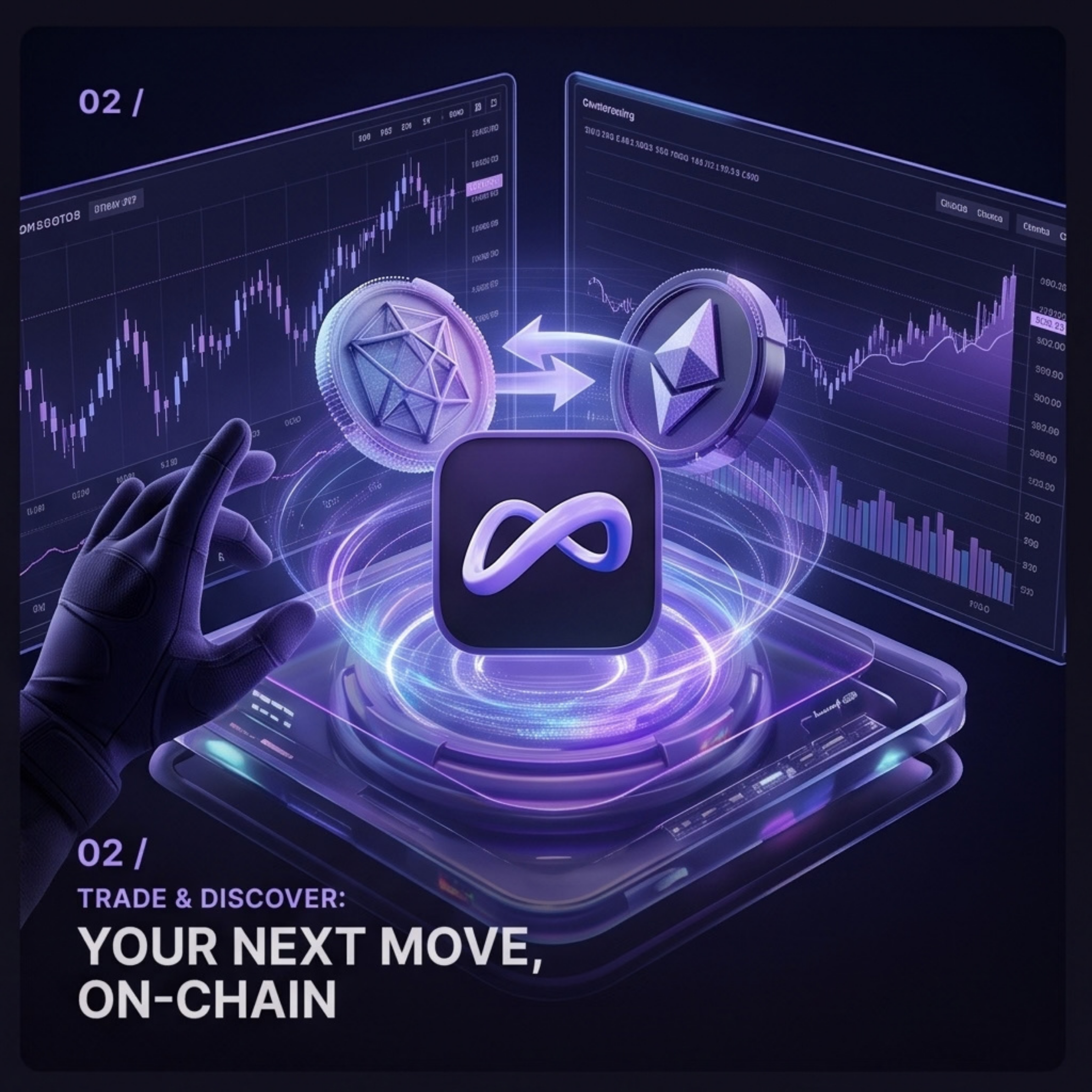
Yield automation
Auto-compounders reinvest rewards into liquidity positions. Native stSATO and cbEGGS integration brings yield products and their associated borrowing workflows into the same app.
Inspect compounders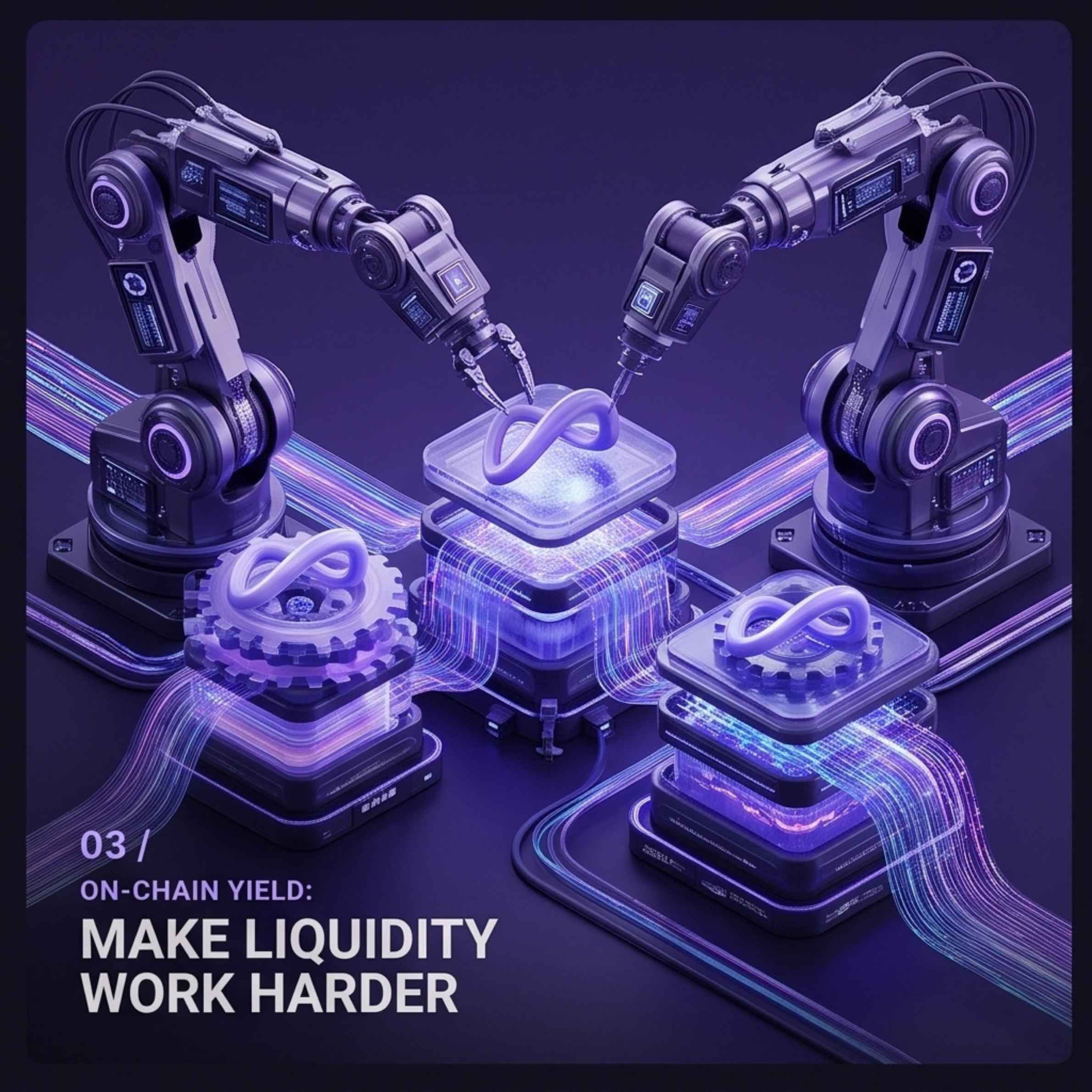
Borrowing & loan management
Compare live borrowing rates across Aave V3, Compound III and Fluid on supported networks. Find competitive rates for the asset you need, then review and manage your supported DeFi loans in one place, including stSATO and cbEGGS positions. Rates are variable; compare collateral requirements, liquidity and liquidation risk before borrowing.
Compare rates & manage loansBuilder infrastructure
API access, analytics and manager tooling connect the interface to execution and monitoring workflows.
Explore the API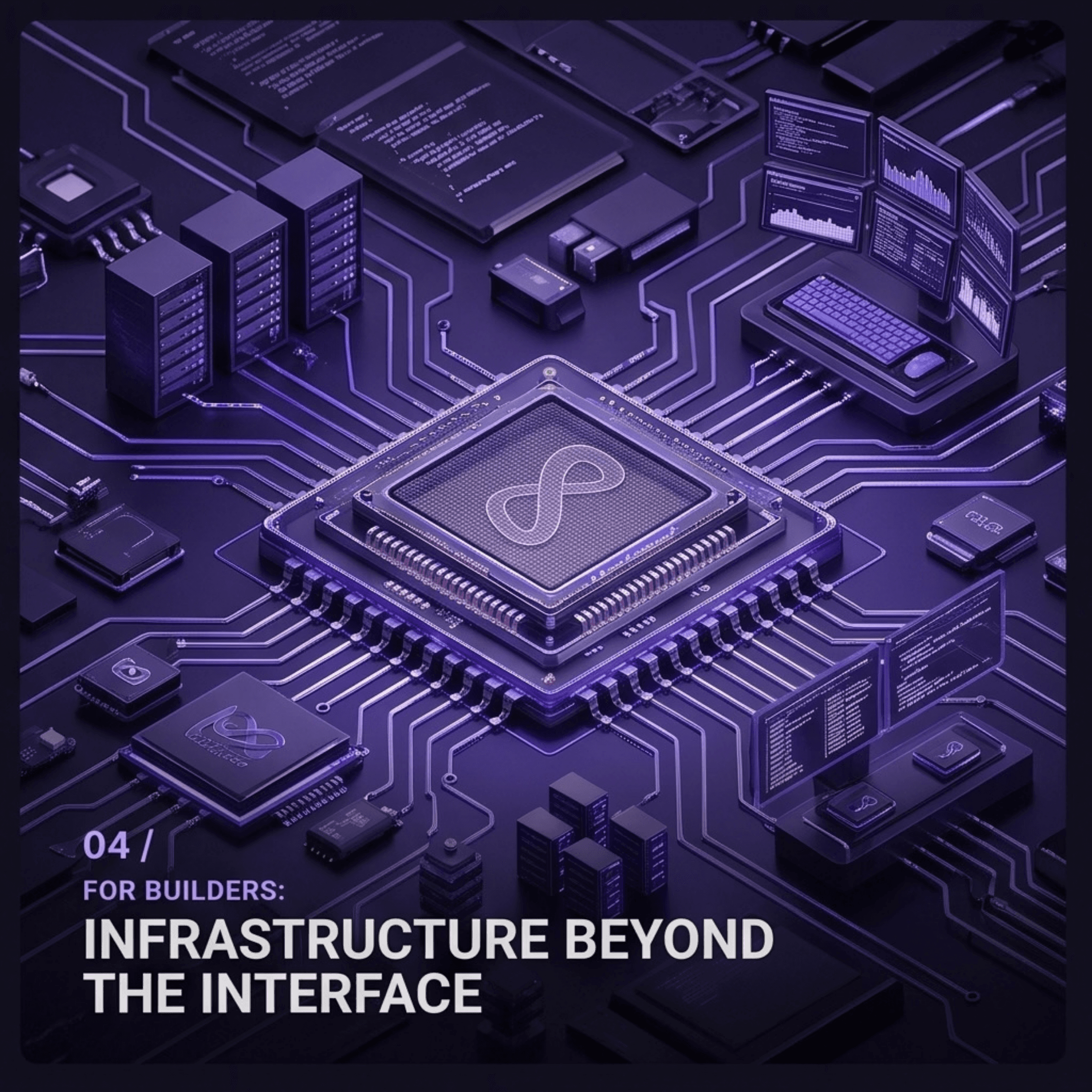
From a market full of noise to a setup worth inspecting.
The Market Scanner is the research desk: multi-timeframe momentum, trend and mean-reversion signals, watchlists and charts.
Compare the watchlist
Review relative momentum, trend alignment and technical signals.
Make the setup yours
Adjust signal settings and multi-condition trade setups using trend, RSI, Bollinger and MACD.
Keep context close
Inspect candle patterns, open grouped signal details and enable device alerts.
Alerts require device permission and work while the scanner is open. Research settings and deployed trading strategies are separate workflows.
Open the Market ScannerThe interface is only the beginning.
Our API connects strategy logic to vault operations. Builders and managers can work with data, configuration and execution without rebuilding the entire interface.
Read the portfolio
Inspect vault composition, balances and trading data. Analytics bring operational context to the same strategies users discover in the app.
Manage the workflow
Manager tooling links vaults and bots, configures strategies and supports transaction workflows. Privileged operations use authenticated routes.
Connect execution
DEX routing and transaction handling provide the bridge between a strategy decision and an on-chain action. Chamber is accepted as the current brand for dHEDGE integrations.
Build beyond a dashboard
The API gives product teams a foundation for custom strategy services and integrations. Use the technical reference for request formats and authorization requirements.
Your deposit becomes a working position.
A vault pools assets under a defined strategy. Users hold a position in that vault, while its manager, bot or contract carries out the strategy’s operations. The app is the place to inspect what it holds and manage your participation.
Deposit & receive a position
In a share-based vault, your deposit receives shares representing a proportional claim on the vault’s assets. The position changes with the assets, not a fixed interest promise.
Let the strategy operate
Trading vaults rebalance or trade through their configured strategy. LP compounders harvest rewards or fees, allocate contract fees, and reinvest the remaining assets into liquidity.
Track & withdraw
The vault’s share value reflects the underlying portfolio. A withdrawal redeems your position according to that product’s available assets, fees and withdrawal rules.
In the Velodrome compounder implementation, deposits are priced against vault assets, shares are minted to the depositor, LP is deployed into the gauge, and withdrawals redeem the user’s shares. The V3 compounder manages a concentrated-liquidity position with its own share accounting and fee collection.
Find your strategyLonger commitment. A different way to participate.
Staking V1 on Optimism lets users lock ITP for one, two, three or four years. The app reads reward rates and reward availability from the contract and previews a lock before you sign.
Choose the lock
Approve ITP, select an amount and duration, then review the rewards allocated to that lock.
Track your position
View each lock’s amount, reward allocation, lock date and unlock date. Existing locks can be extended through the staking workflow.
Unlock or exit early
Withdraw matured locks, or use the early-withdraw path. The current penalty is shown in the app and decreases over the remaining lock period.
Rewards are funded in the staking vault, not created by the frontend. The interface tracks total staked, rewards remaining, collected penalties and penalties burned. Contract operations can fund rewards, convert penalties into rewards or burn penalties.
Useful products. Multiple revenue engines.
Infinite Trading is more than a vault directory. Trading, bridging and liquidity automation create distinct fee paths, while new products expand where the ecosystem can earn.
Distribution becomes a fee channel.
The site’s LI.FI widget is configured with a 0.2% InfiniteTrading integrator fee. Eligible routed swaps and bridges can generate integrator revenue through the widget’s quote and execution flow.
Liquidity earns. The protocol participates.
The V3 contract allocates 1.5% of collected trading fees to the DAO and 0.5% to the executor. The remaining 98% is allocated to compounding. These percentages apply to collected fees, not to vault principal.
Convenience is another product surface.
The V3 implementation charges a 0.3% DAO fee on its single-token zap-in and zap-out flows. Ordinary vault operations and different compounder types have separate mechanics.
Implementation/configuration references: LI.FI widget, UniV3AutoCompounder and the contract registry. Fees depend on the selected route or deployment; these are not reported revenue totals.
Earn. Buy back. Burn. Reinvest.
Velodrome auto-compounders charge a 10% fee on harvested earnings, not on deposited capital. That fee is converted into ITP: almost all of it is burned, with a small incentive paid to the caller who executes the compounding transaction.
Harvest rewards
Convert fee portion to ITP
Distribute + burn
Compound remaining rewards
The operating split is 99.5% burn / 0.5% caller or 99.9% burn / 0.1% caller, depending on the vault configuration. These splits apply to the 10% fee portion, not the entire harvest. The remaining 90% of earnings is allocated to reinvestment.
For every 100 units of harvested earnings, 90 are allocated to compounding and 10 to fee conversion. Of those 10 units, the burn allocation is equivalent to 9.95–9.99 units and the caller incentive to 0.05–0.01 units before conversion costs.
Buying ITP and removing ITP from supply are linked to successful harvest execution. This is a contract-driven process when rewards are available and the configured route succeeds, rather than a claim that every swap or every compounder burns ITP.
Operating allocation supplied by the protocol team. Contract fee categories are configurable; constructor defaults are not a record of each deployed vault’s active settings. The implementation catches a failed ITP burn and transfers that allocation to the protocol recipient instead. V3 DAO-fee distribution is a separate mechanism; it does not itself call the ITP burn function.
On-chain positions. Public rules. Verifiable activity.
The on-chain product layer puts asset movements, contract state and token burns on public networks. Users interact through wallets, and protocol code can be inspected independently of the interface.
Wallet-led participation
Users authorize deposits and withdrawals through their wallets. The frontend connects the user to the underlying contracts; it is not a substitute for them.
Contract-level accounting
Share balances, fees, staking locks and burn events are represented in contract state or events, creating a public trail beyond a marketing dashboard.
Open implementation
The public protocol repository exposes the machinery behind vault and token products. Explorer links connect this guide to deployed addresses.
Explicit control boundaries
Owners, managers, keepers and upgrade permissions are part of the architecture. The degree of decentralization is assessed per deployment, not assumed from the word “DeFi.”
Built, not promised. Inspect the work.
The strongest starting point is the product itself: discoverable vaults, working research tools, token activity and public protocol code.
ITP connects the ecosystem’s participation loop.

ITP is the ecosystem token. The app provides token information, staking and liquidity participation surfaces, alongside governance-related product information.
Staking rewards support long-term participation. Liquidity makes the token tradable. Contract-driven fee conversion and burn allocation connect selected strategy activity to ITP. The token page and burn history make that activity inspectable.
A market for strategies, not just transactions.
The opportunity spans investors seeking managed strategies, traders needing research and execution, liquidity providers wanting automated reinvestment, and teams building on the API.
DeFiLlama snapshots accessed October 3, 2026: total DeFi TVL $95.141B; Yield category $4.722B. CoinGecko’s 2025 annual report: $6.7T in annual volume for the top 10 perpetual DEXs. These are separate capital and activity benchmarks, not additive markets.
$100B working capital opportunity
A rounded planning assumption anchored to the approximately $95B DeFi TVL benchmark. Algorithmic and agentic trading, vaults and liquidity products compete for overlapping capital. We count that capital once, rather than sum category totals.
$10–25B serviceable-capital scenarios
An assumed 10–25% eligible subset of the working TAM, shaped by supported chains, assets, strategy fit and distribution. This range is a planning scenario, not a measured inventory of capital available to the current products.
$100–250M TVL at 1% of that reachable subset
At an assumed 1% annual effective fee, that represents $1–2.5M in annual gross fees. The broader 1%-of-TAM case is $1B average TVL and $10M in annual gross fees. These are adoption scenarios, not current market share or forecasts.
We size opportunity by product: capital served for vaults, eligible routed volume for swaps and bridges, collected fees for compounders, and adoption for infrastructure. Each maps to a different economic engine.
The strategy engine can reach beyond crypto.
Infinite Trading already routes into tokenized stocks and runs a tokenized-gold RWA vault. The plan is to extend our research, automation and liquidity products further into real-world assets: a strategy platform across asset classes, not a product stack limited to crypto-native tokens.
RWA.xyz overview accessed October 3, 2026: $38.68B distributed asset value. Its separately reported represented assets and stablecoins are not added here. McKinsey’s June 20, 2024 analysis projects about $2T in tokenized market capitalization by 2030, excluding cryptocurrencies and stablecoins, with a $1–4T scenario range. The projection covers multiple asset classes, not stocks alone, and is not a measure of today’s available liquidity.
Tokenized stocks & equity baskets
Tokenized US stocks and ETFs on Robinhood Chain and Base can already be bought from Trade through LI.FI routes. Stock-strategy vaults with systematic allocation and rebalancing remain planned; the Robinhood Agent experience is a proof of concept, not a production vault.
RWA vaults: tokenized gold & more
The Inflation Hedge vault on Polygon already allocates to tokenized gold (PAXG) alongside BTC, ETH and USD yield. Next: tokenized Treasuries, commodities and other suitable RWAs as strategy building blocks.
Algorithmic & agentic trading
Systematic trading is already a cross-market discipline: research, portfolio construction, execution and monitoring serve equities, currencies, fixed income and derivatives as well as crypto. Our longer-term opportunity is to bring the same connected workflow to supported assets and venues, with agentic tools extending that automation.
Vaults, liquidity & API integrations
A broader asset universe could support new strategy vaults, liquidity products, routed execution and builder integrations. These create potential capital-based, activity-based and service-based revenue channels, modeled separately according to how each product earns.
Validate the asset universe
Identify suitable issuers, assets, chains and venues, including eligibility, custody and redemption requirements.
Adapt the strategy layer
Account for market sessions, price feeds, corporate actions and liquidity behavior before extending trading or rebalancing logic.
Expand the products
Move from proof-of-concept research to validated integrations and product-specific launches. Release scope and timing depend on implementation and testing.
The algorithmic-trading solutions and services market is also a distinct revenue opportunity. MarketsandMarkets’ 2019 report projected $18.8B for 2024 across platforms, software and services. That is a historical industry forecast, not current measured capital under management or an estimate of the agentic-trading segment. It illustrates a separate software and infrastructure market rather than another pool of TVL.
Think of the TAM as two horizons: the current $100B working crypto/DeFi capital scenario, and a broader future surface across tokenized assets and cross-market automation. The RWA figures can overlap with DeFi, the 2030 projection is future capital, and the algorithmic-industry estimate is revenue. We do not add them into one inflated total. The calculator below keeps its existing $100B, 1% share and 1% annual-fee assumptions unchanged.
A small share of a large market changes the scale.
Start with the $100B working capital opportunity. A 1% market share represents $1B in average TVL. At an assumed 1% annual effective fee on that capital, the model produces $10M in annual gross fees. Adjust the inputs to model a narrower serviceable market or a different adoption level.
Average TVL = addressable capital × market share
Annual gross fees = average TVL × effective annual fee
Three ways to frame the opportunity
| Scenario | Capital surface | Share | Average TVL | Annual gross fees |
|---|---|---|---|---|
| Focused entry | $10B | 0.1% | $10,000,000 | $100,000 |
| Serviceable-market case | $25B | 1% | $250,000,000 | $2,500,000 |
| Broad-TAM ambition | $100B | 1% | $1,000,000,000 | $10,000,000 |
Default assumptions: $100B capital surface, 1% share and 1% annual effective fee. The fee is a modeling assumption across products, not a universal contract fee; performance fees and harvest fees cannot be treated as 1% of TVL without yield and activity inputs. Average TVL must be sustained over the modeled year. Gross fees are before costs, incentives, fee sharing, burns and taxes, and are not profit or ITP-holder income. API revenue and swap/bridge fees are separate potential revenue streams, excluded here.
More products. More ways to earn.
Make the stack useful today.
Native stSATO and cbEGGS integration, Uniswap V3 compounders on Base, vault-category browsing, loans, perpetuals navigation and Chamber vault workflows.
Each release opens another workflow: liquidity produces fees, borrowing serves capital demand, and integrated execution gives users more reasons to remain in the ecosystem.
Broaden what can be automated.
Uniswap V4 compounders, expanded agentic trading, Coinbase exchange integration and an ML model builder. The builder’s UI and mock implementations are the current milestone toward a larger research, backtesting and deployment workflow.
Status source: the repository’s 2026 product roadmap. Development items are separate from shipped products; timing remains subject to implementation and validation.
Inspect the full roadmapThe context behind every decision.
Market & strategy
Prices change. Models can fail, overfit or behave differently in new regimes. Automation can execute a losing strategy consistently.
Contracts & operations
Contracts, integrations, oracles, RPCs, managers and upgrade controls are dependencies. Review the controls for the specific product.
Liquidity & execution
Slippage, LP divergence loss, liquidity availability, network costs and withdrawal mechanics affect outcomes.
Borrowing & token exposure
Loans add debt, fees and collateral risk. Tokens and staking have separate market and contract risks; neither is a savings account.
Nothing here is financial advice. Inspect the product, its implementation and its risk context before allocating capital.
Historical results do not predict future returns. Automation does not guarantee performance. Contract control permissions vary by deployment. Staking reward availability and exit terms are contract-specific; token ownership is distinct from vault ownership and does not create an automatic entitlement to protocol revenue. Market scenarios are illustrative, not forecasts.
Follow the links. Verify the system.
Selected addresses from the frontend’s contract registry. Verify the chain, current implementation and permissions before interacting; this is not a complete deployment inventory.